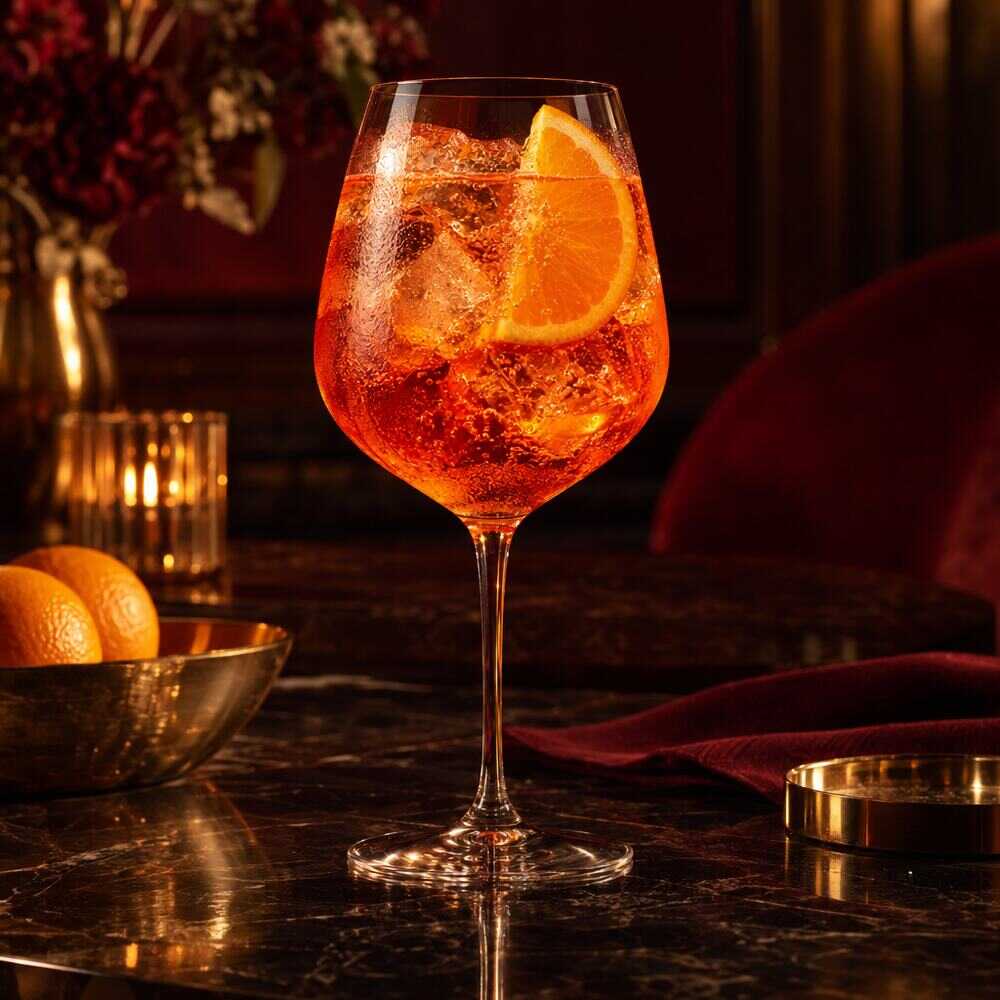
Aperol Spritz Recipe
Bright, bitter orange meets dry Prosecco and a splash of soda in Italy's most refreshing aperitivo. Three parts Prosecco, two parts Aperol, one part soda over ice: crisp, low in alcohol, and built for warm afternoons on the patio.
Ingredients
- 3 ozProsecco, chilled
- 2 ozAperol
- 1 ozclub soda, chilled
Garnish
- Orange half-wheel or slice
Equipment: Large wine glass, jigger, ice, bar spoon
Method
- Fill a large wine glass with fresh ice cubes, ideally to the top so the drink stays cold and the bubbles last.
- Pour in the chilled Prosecco first, measuring 3 oz, so the wine and Aperol combine without over-agitating the bubbles.
- Add 2 oz Aperol, then top with 1 oz chilled club soda.
- Stir gently once or twice with a bar spoon to lift the color through the glass without knocking out carbonation.
- Garnish with an orange half-wheel and serve immediately while the spritz is still sparkling.
About the Aperol Spritz
The Aperol Spritz traces its roots to Veneto, Italy, where the bitter orange aperitivo Aperol was first made in 1919. After World War II, the spritz became the go-to pre-dinner drink of the Veneto, and the 3-2-1 formula (three parts Prosecco, two parts Aperol, one part soda) became the standard that bars across the world still use today. It is a low-alcohol aperitivo built to wake up the palate before a meal.
To nail it, keep everything cold: chill the Prosecco, Aperol, and soda before you build, and use a big wine glass packed with ice so the drink stays lively. Choose a dry, crisp Prosecco rather than a sweet one, and add the soda last so the bubbles survive the stir. Skip the heavy hand on Aperol and the drink turns cloying; too much and it turns bitter. The 3-2-1 ratio is the whole game.
- Chill all three liquids before building so the ice does not melt too fast and dilute the drink.
- Use a dry Prosecco (Brut or Extra Dry) for balance against Aperol's sweetness.
- Pack the glass with ice to the rim; a half-filled glass lets the spritz go flat quickly.
- Add the soda last and stir only once or twice to preserve carbonation.