
Event Planning with Wine
The best whiskey, bourbon, and scotch for home bars is a balanced mix: one approachable bourbon, one versatile whiskey or rye, and one scotch that matches how you actually drink. If you are trying to build a shelf
The best whiskey, bourbon, and scotch for home bars is a balanced mix: one approachable bourbon, one versatile whiskey or rye, and one scotch that matches how you actually drink. If you are trying to build a shelf that feels useful instead of crowded, start there and add glassware, a decanter, and a few cocktail basics.
A useful home bar starts with a few bottles that work hard. You want spirits that can pour neat, mix into classic cocktails, and still feel right when friends stop by after dinner. In Commack and across Long Island, that usually means one bourbon, one whiskey or rye, and one scotch that fits your taste.
A crowded shelf looks impressive for about five minutes. Then it becomes the bottle you never open, the backup you forgot about, and the one you bought because the label looked nice. A tighter selection gives you better pours and fewer regrets, especially if you shop at a liquor store in Commack or order through an online liquor store.
Here is the part most homeowners miss: the best home bar is built around use cases, not ego buys. If you drink bourbon old fashioneds, keep bourbon front and center. If you like smoky pours after dinner, make room for scotch. If you host often, choose bottles that work for both guests and cocktails.
A simple stocking plan looks like this:
One customer from Huntington came in wanting “the good stuff” for a new bar cart, then admitted he mostly made one cocktail and poured the rest over ice. We steered him toward a bourbon, a rye, and a scotch with broad appeal. He left with less, spent less, and actually used every bottle.
The easiest way to avoid overbuying is to think in flavor lanes. Bourbon brings vanilla, caramel, and oak. Rye usually adds pepper and lift. Scotch can lean honeyed, fruity, malty, or smoky depending on the style. If you are serving different people, that range matters more than chasing a rare bottle.
Spirit styleBest useFlavor profileBest forBourbonCocktails and casual sippingSweet, round, oakyOld fashioneds, barbecue nightsRye whiskeyStirred cocktailsSpice, dried fruit, structureManhattans, whiskey soursBlended scotchFlexible sippingSmooth, balanced, light smokeGuests and easy poursSingle malt scotchSippingMalt, fruit, smoke, depthQuiet evenings, tasting flightsIf you want a shortcut, think of bourbon as your crowd-pleaser, rye as your bartender’s tool, and scotch as your after-dinner bottle. That mix gives you range without turning the cabinet into a warehouse.
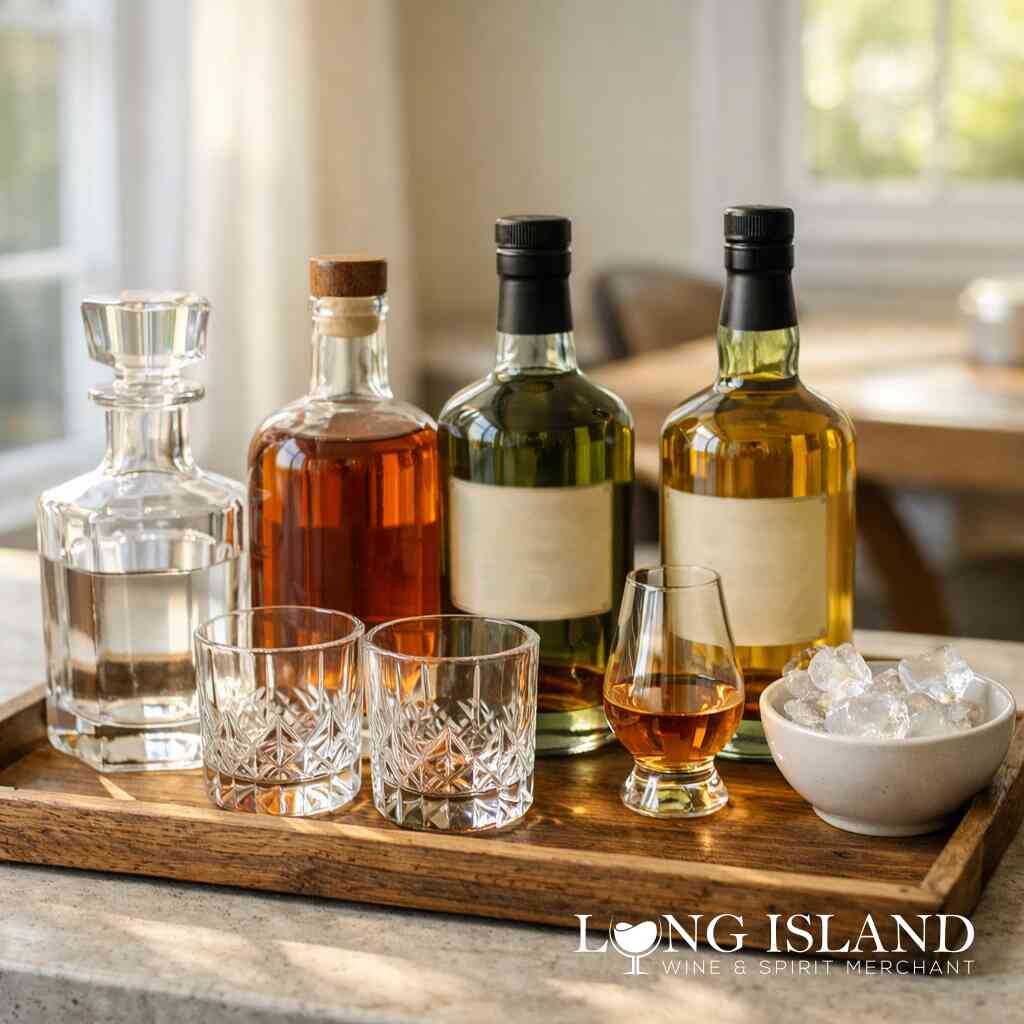
You do not need a full bar set. You do need the right basics. A good rocks glass, a tasting glass, and a simple decanter make the whole setup feel complete. If you like cocktails, add a jigger and a mixing spoon. If you host often, keep a tray and ice bucket nearby.
A small set of whiskey glassware does more than look nice. It helps you taste aroma, control dilution, and serve with intention. A decanter is optional, but it can make an everyday bottle feel like part of the room rather than a random purchase on the counter.
If you are shopping locally, curbside pickup can be the fastest way to grab what you need before dinner. That matters on a busy stretch of Jericho Turnpike, especially when you are trying to get home from work, beat traffic, and still have time to pour something decent before guests arrive.
The right bottle depends on the moment, not just the label. For steak night, you want body and oak. For cocktails, you want balance and proof. For a quiet sip, you may want texture, smoke, or sweetness. The smartest home bar choices solve more than one occasion.
Bourbon is a type of whiskey, but not all whiskey is bourbon. Bourbon must be made with at least 51% corn and aged in new charred oak barrels. That usually gives it a sweeter, rounder profile. If you want the clearest breakdown, our whiskey guide and this bourbon primer are useful starting points.
For cocktails, that difference matters. Bourbon works beautifully in old fashioneds because it brings sweetness and oak. Rye whiskey often works better in a Manhattan because its spice stands up to vermouth. If you like a softer cocktail, a wheated bourbon can feel smoother and rounder.
A practical cocktail cheat sheet:
If you want a simple mixer shortcut, whiskey sour ingredients can help you make a fast home version without turning the bar into a project.
This is where a lot of people get stuck, especially if they are shopping in a hurry near Commack, Smithtown, or Dix Hills. The answer is easier than it looks. Choose the style that matches the drinker. 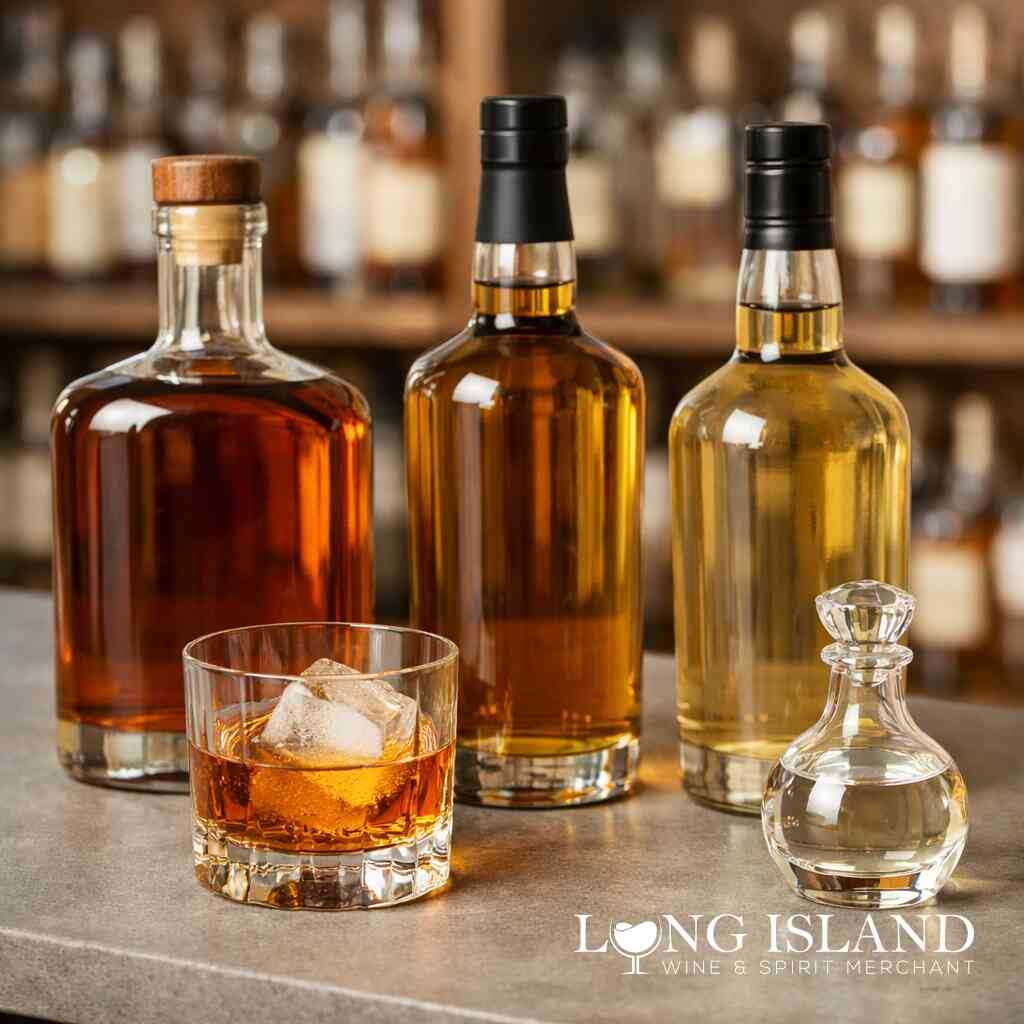
Bottle typeBest forTaste directionGood reason to buySingle malt scotchSippingLayered, expressive, often fruit or smokeBest if you want a slow pourBlended scotchMixed groupsSmoother, lighter, more approachableBest if guests have different tastesRye whiskeyCocktailsDry spice, lift, backboneBest for Manhattans and stirred drinksWheated bourbonSipping and cocktailsSoft, rounded, mellowBest if you like less sharpnessIf you are making a steak dinner at home, bourbon and barbecue pairings are easy wins. If you are serving cheese after dinner, a lighter single malt or blended scotch can be a better fit. For a gift, a bourbon gift set or scotch gift set feels polished without trying too hard.
Smoke and strength are not the same thing. Smoky scotch or peated scotch gets its character from malt smoked with peat. Barrel proof whiskey and cask strength bourbon refer to bottles that are bottled with little or no dilution, so they taste bolder and hotter. One is about flavor source. The other is about proof.
If you like strong cocktails, barrel proof can be useful because ice and bitters tame it well. If you want a serious sipping bottle, cask strength bourbon can be excellent, but it is not the easiest place to start. Peated scotch is more specific. Some people love it instantly. Others need time.
I usually tell shoppers this: if you are unsure, buy a bottle that says smooth, balanced, or classic before you chase extremes. The goal is a home bar you actually reach for. If you want deeper background on sourcing and selection, Long Island artisan spirits can be a smart local read, especially if you like supporting regional producers and learning what makes a bottle distinct.
For shoppers who want a trustworthy local source, Long Island Wine & Spirit Merchant at Jericho Turnpike in Commack is a practical choice. They serve people looking for wine and spirits across Suffolk County, and they also make it easy to compare options without rushing. Their local delivery and in-store pickup can help when you need a bottle for a steak night, a last-minute dinner, or a quiet night in.
The best whiskey for a home bar is usually a balanced bourbon or rye that works in cocktails and still tastes good neat. Bourbon is the safer all-around pick if you want sweetness and oak. Rye is better if you make Manhattans or want a spicier pour. If you only buy one bottle, choose the one you will actually drink most.
Bourbon is not better than whiskey overall, but it is often better for certain cocktails. It gives old fashioneds a round, sweet base. Rye whiskey usually works better in Manhattans because it adds spice and structure. So the real answer is about the drink, not the category.
Beginners usually do best with a blended scotch or a light single malt. Those styles are often smoother and easier to sip than heavily peated scotch. If you are curious about smoke, start with a small pour before buying a full bottle. That keeps the learning curve low.
Most people need three to five bottles. A bourbon, a rye or other whiskey, and one scotch cover most situations. Add vodka or gin only if you plan to make those drinks often. A small, thoughtful bar is easier to use than a large one.
Yes. If you want help choosing a bottle in Commack, a local shop can guide you based on how you drink, not just what is popular. Long Island Wine & Spirit Merchant is one option for that kind of help, with in-store shopping, delivery, and guidance for home bar basics. If you want to check local rules on alcohol sales and delivery, the New York State guidance and the NIAAA alcohol facts are good reference points for general alcohol education and responsibility.
If you want a home bar that feels intentional instead of crowded, start with one bourbon, one rye or whiskey, and one scotch, then fill in the glassware. If you need a little help choosing, call Long Island Wine & Spirit Merchant at 16313437200 or order online for delivery or pickup in Commack.
Order online for same-day or next-day Long Island delivery, free curbside pickup in Commack, or wine shipping to the states where it is legal.
Shop now Take the quiz