

What Wine Goes With Salmon: Grilled, Roasted, or Seared
What Wine Goes With Salmon: Grilled, Roasted, or Seared
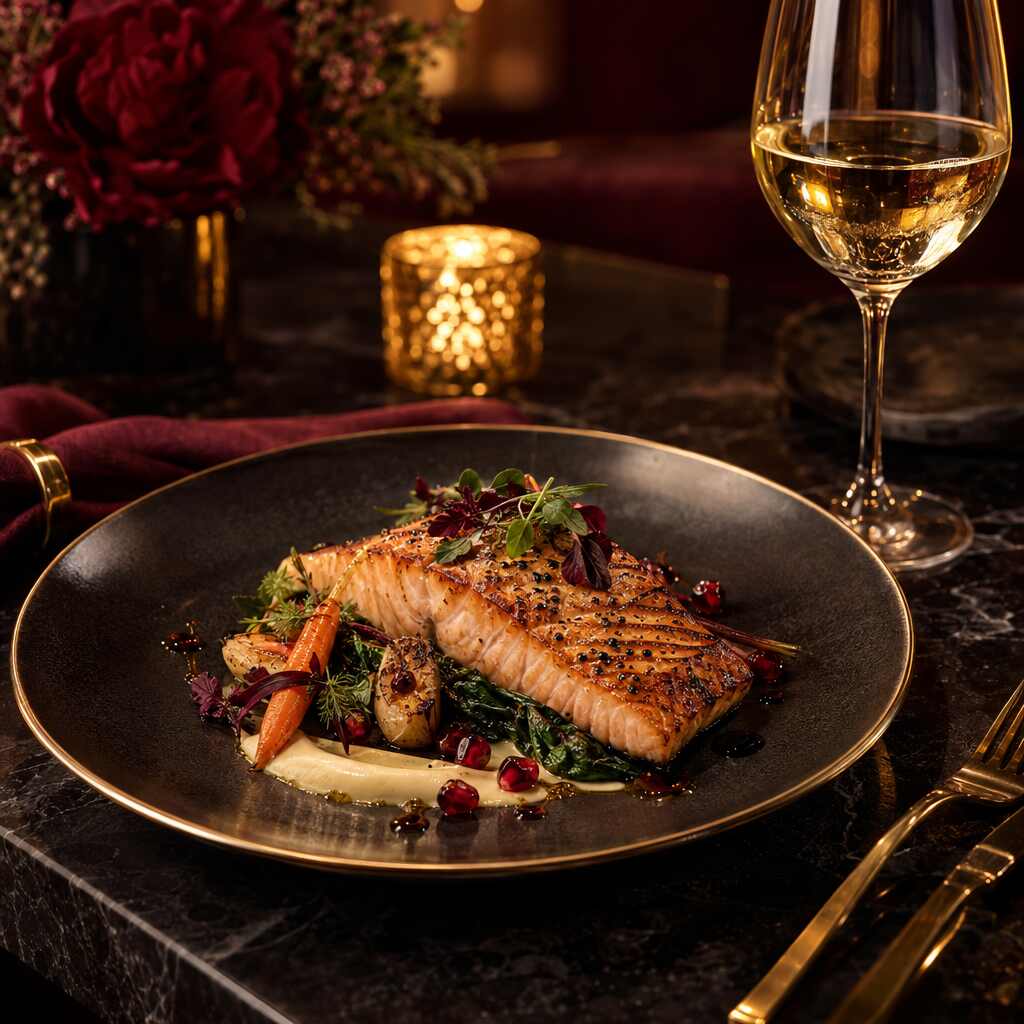
Salmon works with either a lighter red or a fuller white, and the cooking method decides which. Grilled and seared salmon build a browned, slightly smoky crust that pulls toward Pinot Noir, while roasted and butter-basted salmon want a Chardonnay with some body. Dry rose covers both, especially with a lighter fillet or a summer plate.
The reason is fat. Salmon is an oily fish, and fat softens tannin while acid cuts through richness. So the wine needs either low tannin and good acid (Pinot Noir) or enough texture to match the oil (Chardonnay).
Our picks for salmon
Low tannin and bright acidity meet salmon's fat without turning metallic, and a little earthy cherry notes pick up the char on a grilled or seared fillet. Serve it slightly cool, around 55 to 60 degrees.
A Chardonnay with moderate oak and creamy texture matches roasted salmon and butter or cream sauces. The wine's body stands up to the oil in the fish instead of getting lost.
Dry rose has the acid of a white and a touch of red fruit, so it handles seared salmon, a squeeze of lemon, or a fillet off the grill. An everyday bottle you can chill and pour without overthinking it.
Why these pairings work
Salmon is a fatty fish, and that single fact drives the pairing. Tannin binds to fat and protein, so a big tannic red like Cabernet turns harsh and metallic against salmon. Low-tannin reds and whites with body stay clean.
Acid is the other lever. A squeeze of lemon, a vinegar-based marinade, or a tomato salsa on top needs a wine with matching acid, or the wine goes flat. Pinot Noir and dry rose both carry that lift.
- Pinot Noir: low tannin, high acid, red fruit. Best with char, smoke, and seared edges.
- Chardonnay: round texture, moderate acid. Best with butter, cream, and roasting.
- Rose: crisp acid, light red fruit. Best with lighter fillets, herbs, and warm-weather plates.
Skip heavy oaked whites with a lot of vanilla and skip tannic reds. Neither does the fish any favors.
How the preparation changes the pick
The cut and the sauce change the pick more than the fish does.
- Grilled or seared, crisp skin: Pinot Noir. The browned crust and rendered fat want a red with acid and no grip.
- Roasted with butter and herbs: Chardonnay. The fat in the pan and the wine’s body line up.
- Cream or beurre blanc sauce: Chardonnay, and lean toward a richer bottling. Acid in the wine cuts the cream.
- Lemon, capers, or a vinaigrette: dry rose or a lean Chardonnay. Match the acid or the wine tastes dull.
- Sweet glaze, honey, maple, or teriyaki: off-dry rose or a fruit-forward Pinot Noir. A touch of sweetness in the wine handles the glaze better than a bone-dry one.
- Spicy rub or blackened seasoning: rose with a little residual sugar. Sweetness beats heat, and a dry red will amplify the burn.
- Cedar plank or smoked: Pinot Noir with some age, or a Chardonnay with oak. Smoke in the fish echoes smoke in the barrel.
Whole side or thicker fillet? Go Chardonnay, the extra fat needs the body. Thin tail piece? Rose or a lighter Pinot Noir.